
When They Feel Distant — But Won’t Say Why

Most couples don’t become distant at once – they drift
It rarely starts with a blowup. It starts with a shorter answer. A conversation that just doesn’t land. And a slow, creeping awareness that the person you love is right there — but somehow not really with you.
You notice it. You ask what’s wrong. They say, “Nothing.”
And somehow, somehow, that one word feels worse than if they had said everything.
You’re not imagining your relationship becoming distant. And you’re not alone in not knowing what to do next.
The mistake most couples make
When You Feel the Distant, You Probably Do One of Two Things
Both are completely understandable. Neither actually works.
Push harder
- Ask more questions
- Try to solve it immediately
- Press until something gives
Or you pull back
- Give space and wait
- Avoid the tension
- Hope things settle on their own
The pushing feels proactive. The pulling feels respectful. But here’s the thing — the distant feeling you have isn’t really about that moment at all. It’s about something that has been quietly building for a while.
What’s actually going on
Distance in a Marriage Is Rarely Sudden
It grows in the gaps. The conversations that got interrupted and never finished. The frustrations that seemed too small to mention, so they didn’t get mentioned — until there were too many of them. The moments where one of you tried to connect and it just didn’t quite click.
None of those moments was a crisis. Together, though? They stack. Not enough to break anything, but enough to slowly change the way she shows up. The way he responds. The way you both move through the same house, somehow feeling further apart.
So when you ask what’s wrong and they say “nothing” — it’s not that nothing is wrong. It’s that they don’t know where to start. Or they don’t believe it will actually change anything if they do.
Decoding the silence
What “Nothing” Is Usually Trying to Say
It almost never means nothing. More often, it means one of these things, and sometimes all of them at once:
- “I don’t feel heard when I do talk, so why bother trying again?”
- “I’m exhausted from having some version of this same conversation.”
- “I don’t want this to turn into another argument where we both just dig in.”
- “Honestly, I’m not even sure how to explain it anymore.”
This isn’t stonewalling for the sake of it. It’s fatigue. And fatigue responds very differently than frustration does.
“Emotional distance doesn’t respond to pressure. And it doesn’t respond to avoidance. It responds to something steadier.”
A different way in
The Shift That Actually Changes Things
When something feels off, most people’s first instinct is: “Tell me what’s wrong so I can fix it.” The impulse makes sense. But emotional distance isn’t a problem with a clean solution — it’s a pattern that responds to presence, not pressure.
The question worth asking isn’t “What do I say?” It’s “How do I show up differently right now?” That small reframe matters more than any single conversation you might try to have.
Instead of, “What’s wrong? Just tell me.”
Stay in the conversation a little longer without pushing for an answer.
Instead of defending yourself the moment you feel accused.
Keep your tone calm, even when it’s uncomfortable.
Instead of waiting for them to come to you.
Move toward, not away — even in small ways.
What steadiness actually looks like
It’s Not Dramatic. That’s Kind of the Point.
When couples imagine “reconnecting,” they often picture a big conversation — a breakthrough moment, a tearful heart-to-heart where everything finally gets said. Sometimes that happens. But more often, connection is rebuilt through smaller, quieter things done consistently.
Staying present when things feel tense instead of retreating
Acknowledging what they feel — even before you fully understand it
Listening without immediately trying to solve or correct
Taking responsibility where you can, without making it about you
Paying attention to patterns over time, not just individual moments
None of this is dramatic. But it’s the kind of consistency that changes the direction of things. Slowly, and then all at once.
The bigger picture
A Marriage Rarely Breaks in One Moment — and It Doesn’t Reconnect in One Either
Drift is gradual. Quiet. Mostly invisible until it isn’t. But that’s also the hopeful part: what drifts gradually can be redirected gradually. Not with a grand gesture. Not with the perfect conversation. But with a steady presence that doesn’t disappear when things get hard — that keeps showing up even when it’s uncomfortable, even when nothing feels resolved yet.
Distance builds over time. So does connection. The question is just which one you’re building right now.
Next step – If you want a clear, practical way to do that, I break it down step-by-step in:
When Marriage Feels Distant: A 7-Day Marriage Reset
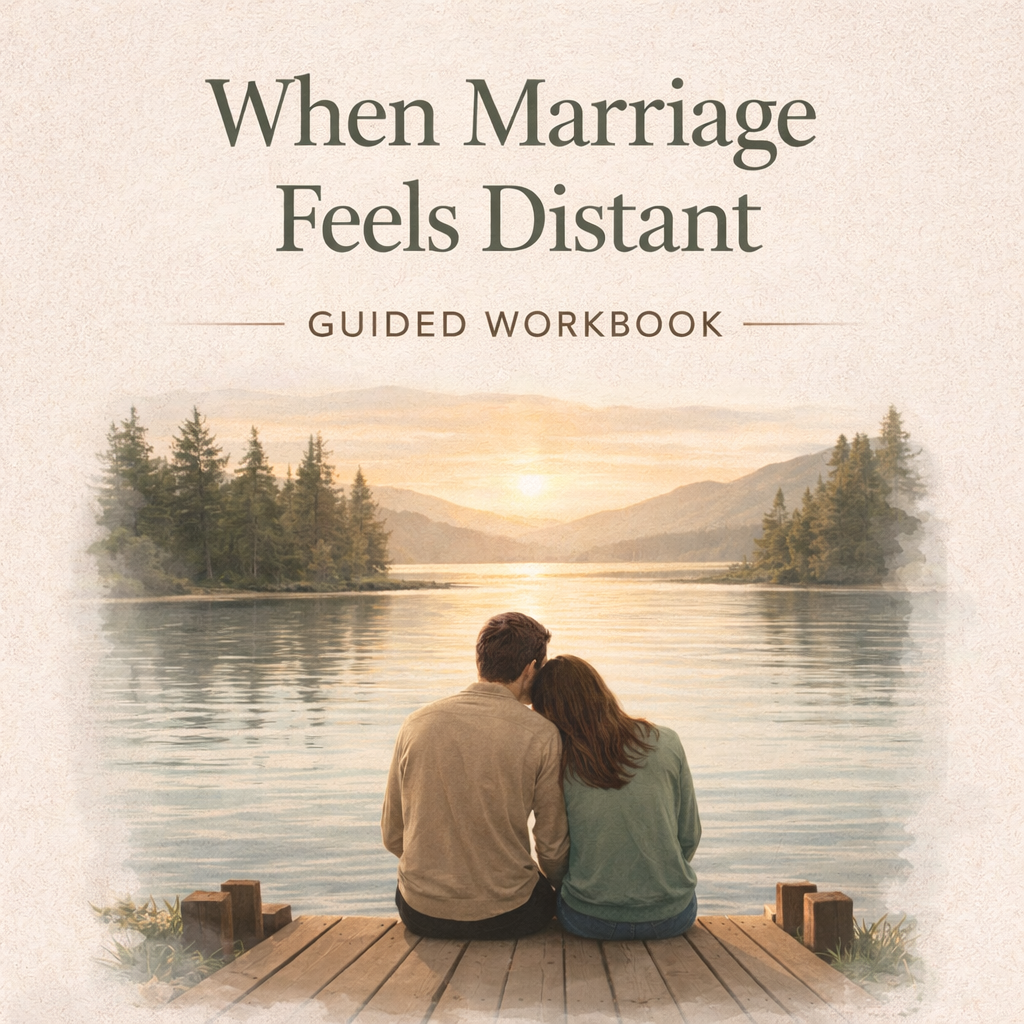
A short, practical guide to ending silent resentment and rebuilding emotional connection — without losing your footing in the process. Step-by-step, one day at a time.
For more articles on marriage and relationships
Follow The Romantic Husband
Continue Reading:
When Things Are Hard | Quiet Truths | Leadership At Home | Foundation | Raising Children
